

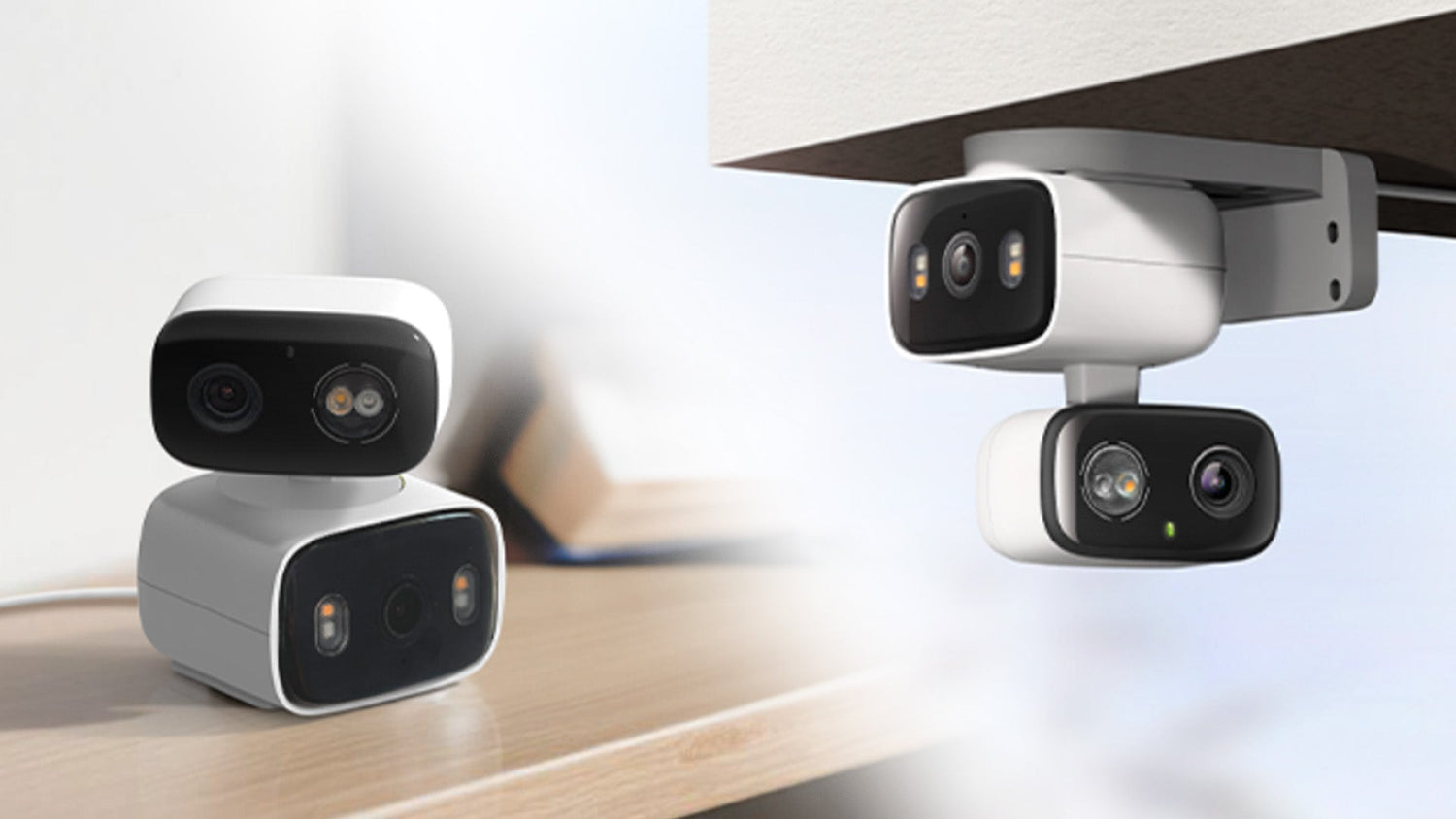
Confused about choosing indoor, outdoor, or indoor/outdoor home security cameras? The best option depends on your security needs. Knowing the differences between these camera types aids in selecting the right one for you.
Home Security Camera Installation Locations
Install outdoor cameras at the front porch, back door, driveway and garage area. Indoor cameras are best placed in hallways, living rooms, nurseries, and kitchens.

Indoor security cameras should capture movement in main rooms and monitor loved ones. Outdoor cameras detect motion from a distance, spotting intruders before they approach your door.

Indoor/outdoor home security cameras offer versatile placement for comprehensive home protection from anywhere. The Tapo C246D features a dual lens design with pan and tilt functionality, allowing wider coverage and more flexible monitoring both indoors and outdoors. With its IP65 weather resistant build and 2K resolution, it delivers clear, detailed footage while standing up to changing outdoor conditions.

Connecting Home Security Cameras
When choosing a home security camera, it is important to consider both how it is powered and how it connects to your network.
If you want maximum flexibility, battery powered models like the Tapo C460 are a great option. With a built in 10000mAh rechargeable battery and support for Tapo solar panels, there is no need to install the camera near a power outlet. It connects via dual band Wi-Fi and comes with an adjustable magnetic base, making it easy to position indoors or outdoors depending on your setup.
For areas where continuous power and stronger network reliability are preferred, outdoor models such as the Tapo C530WS offer both Wi-Fi and Ethernet connectivity. The dual external antennas help extend wireless coverage, while the Ethernet port provides a stable wired connection if needed. This makes it especially suitable for larger outdoor spaces or locations further from the router.

Weather Conditions for Home Security Cameras
Indoor temperatures are manageable, unlike outdoor conditions. Outdoor security cameras need to withstand extreme weather. Selected Tapo outdoor models feature IP66 or IP65 weatherproof ratings, excel in harsh, rainy, and dusty environments. They incorporate waterproof microphones, loudspeakers, sealing rings, and other water-resistant components for robust performance.

Light Levels for Home Security Cameras
Light levels can change dramatically between day and night, especially outdoors. A reliable home security camera should be able to capture clear details even in low light or complete darkness.
While indoor cameras are designed for shorter distances, outdoor cameras often need to monitor wider areas where lighting is limited. Advanced night vision technology makes a significant difference in these situations.
The Tapo C660 KIT features Starlight Colour Night Vision, allowing it to capture vivid full colour footage even in very low light conditions. Instead of relying only on traditional black and white infrared imaging, it preserves natural colours and clearer details without the need for bright spotlights. Combined with 4K resolution and solar power support, it delivers dependable protection day and night with minimal maintenance.

Frequently Asked Questions about Indoor/Outdoor Cameras
Q1: Can you use an outdoor camera indoors?
A1: Outdoor cameras are typically designed to withstand various weather conditions and have features like weatherproofing, rugged construction, and enhanced durability to handle outdoor environments.
There is no technical limitation that prevents you from using an outdoor camera indoors. However, these features would be redundant indoors and their typical sizes would be too unwieldy in average rooms. Some cameras are designed for both indoor and outdoor use and may have features that bridge the gap between the two.
Q2: What are the differences between indoor and outdoor home security cameras?
A2: Outdoor cameras are weatherproofed to withstand harsh conditions, feature rugged construction for durability, and offer powerful night vision capabilities for monitoring in low-light environments. They also have wider fields of view to cover larger outdoor areas and may include additional mounting options.
In contrast, indoor cameras focus on blending seamlessly with home interiors, have narrower fields of view for targeted monitoring, and may incorporate environmental sensors. While outdoor cameras prioritise weather resistance and robustness, indoor cameras prioritise aesthetics and functionality within indoor environments.
Q3: What is the most common camera used to monitor indoor and outdoor security?
A3: Wire-free battery-powered cameras are increasingly popular for both indoor and outdoor security monitoring. These cameras offer flexibility in terms of installation and can be easily placed in various locations without the need for wiring or a power source nearby. They are typically wireless and rely on rechargeable batteries for power, allowing them to be installed in areas where traditional wired cameras may not be feasible.
Battery-powered cameras often provide essential features such as motion detection, two-way audio, mobile app integration, and cloud storage options. They are suitable for monitoring both indoor and outdoor spaces, providing convenience and versatility in home security setups.

Leave a comment
This site is protected by hCaptcha and the hCaptcha Privacy Policy and Terms of Service apply.