



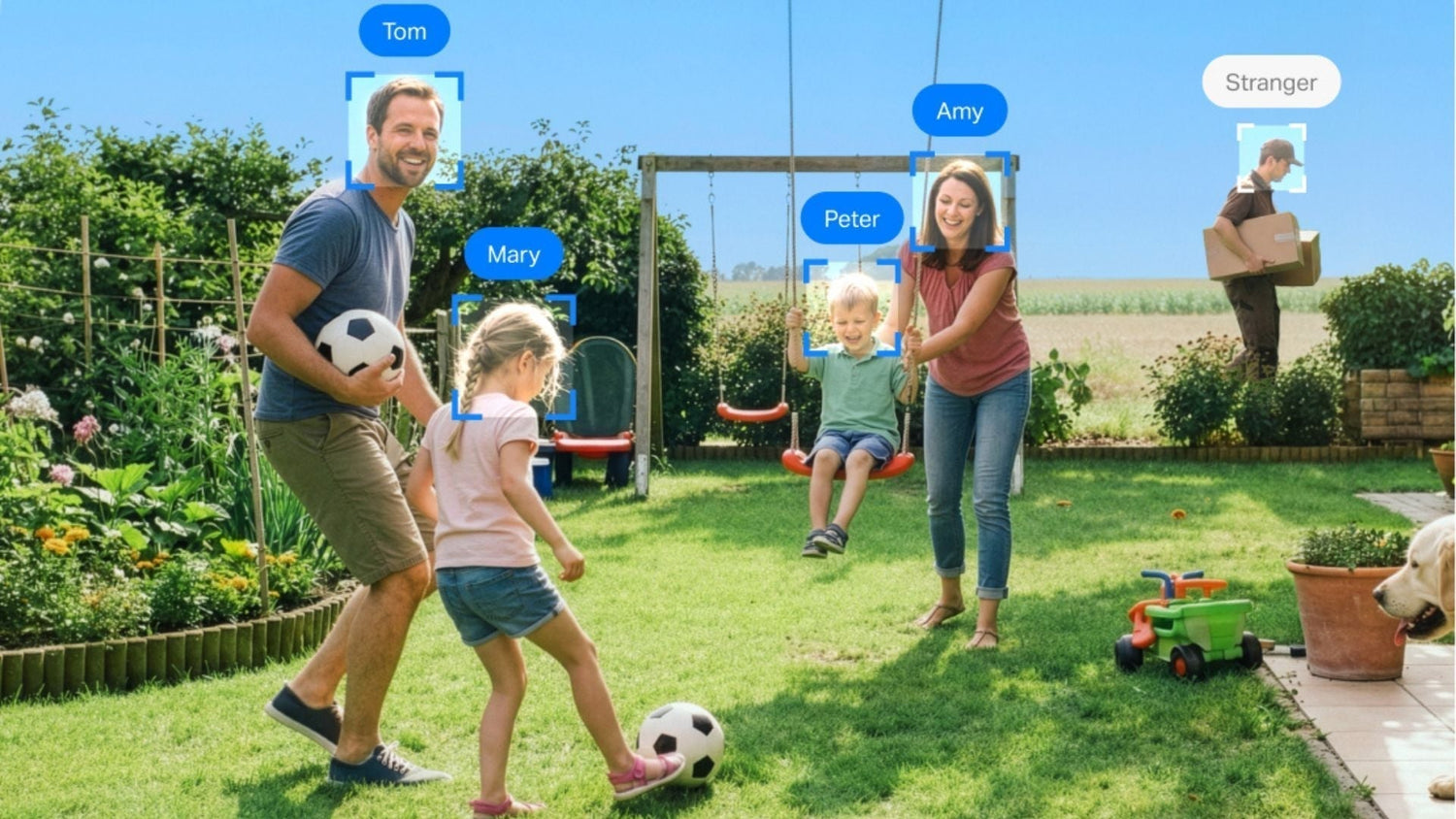
Choosing a home security camera today involves more than just comparing price or resolution. From AI detection and colour night vision to app integration and storage options, modern cameras offer a wide range of features. The key is knowing which ones matter for your situation.
Start With Your Use Case
Before comparing specifications, consider where and how the camera will be used.
Indoor monitoring focuses on everyday visibility and convenience. Outdoor protection requires wider coverage and stronger night performance. Package monitoring prioritises accurate motion alerts near entry points. For elderly or pet care, quick access and two-way communication are often more important than technical specifications.
Clarifying the primary use case makes it easier to evaluate the features that follow.
Criteria 1: Resolution and Image Detail
Video quality is a key factor when choosing a home security camera. Resolution determines how much detail can be captured, especially when reviewing footage or zooming in.
While 1080p remains sufficient for basic indoor monitoring, 2K has become a common standard in modern home security, offering sharper detail and better zoom performance. For larger spaces and outdoor areas, 4K provides higher clarity and improved distance identification.
Common resolution levels are summarised below:
|
Pixel Dimensions |
Typical Use Case |
|
|
720p |
1280 × 720 pixels |
Basic monitoring where high detail is not critical, e.g., small indoor spaces or temporary setups. |
|
1080p |
1920 × 1080 pixels |
Suitable for everyday indoor viewing. |
|
2K (3MP) |
2560 × 1440 pixels |
A common standard in modern home security cameras, offering sharper detail for most indoor areas and entry points. |
|
3K (5MP) |
~2880 × 1620 pixels |
Provides improved clarity over 2K, useful for larger rooms or outdoor entry areas where more detail is needed. |
|
4K (8MP) |
3840 × 2160 pixels |
Ideal for wider outdoor spaces such as driveways or front yards where identifying finer details at a distance is important. |

While higher resolution generally means clearer images, it is also important to consider storage capacity and network bandwidth. Image clarity is only one part of the equation. How your footage is stored is equally important.
Criteria 2: Storage Options and Subscription Models
People want to record videos when using a home camera. It's thus necessary to confirm how the videos are stored. Generally, there are two methods of storage.
Local storage saves video footage directly to a microSD card installed in the camera. Many modern systems support large capacity cards, in some cases up to 512GB. This option does not require an ongoing subscription and allows you to access recordings through the app. However, if the camera is damaged or removed, the footage stored on the card may also be lost.
Cloud storage uploads event-based clips to a secure online server. As long as you log in to your account, you can access recorded footage remotely. Cloud plans usually offer different retention periods and additional features such as richer notifications. The trade-off is that cloud recording typically requires a subscription and depends on a stable internet connection.

Some cameras support 24/7 continuous recording to a microSD card, but this usually requires consistent power. Battery and solar models may still support local microSD storage, but they typically record motion triggered clips to manage power consumption.
Criteria 3: Coverage and Camera Movement
Viewing angle determines how much area a camera can capture within a single frame. It is usually measured in degrees. A wider angle allows you to see more of a room or outdoor space without installing additional cameras.
Many fixed lens cameras offer viewing angles ranging from around 100° to 120°. This is generally sufficient for small to medium sized indoor rooms. However, wider angles can sometimes introduce distortion at the edges of the frame, so balance is important.
For larger areas, cameras with pan and tilt functionality provide greater flexibility. Instead of relying on a single fixed field of view, a pan tilt camera can rotate horizontally and vertically to cover a broader area. Some models support up to 360° horizontal rotation, significantly reducing blind spots within a room.

In outdoor settings, coverage becomes even more important. Driveways, entrances and backyards often require both sufficient viewing angle and the ability to adjust direction after installation. Choosing between a wide fixed lens and a movable camera depends on the layout of the space and whether you prefer full room visibility or targeted monitoring. Seeing more is useful but understanding what is happening matters even more.
Criteria 4: Motion Detection and AI Recognition
Motion detection has long been a standard feature in home security cameras. Traditional systems detect changes in movement within the frame and trigger recording or notifications accordingly. While effective, this method cannot distinguish between different types of motion. Moving shadows, passing vehicles or pets can all trigger alerts, which may result in frequent notifications that are not always relevant.
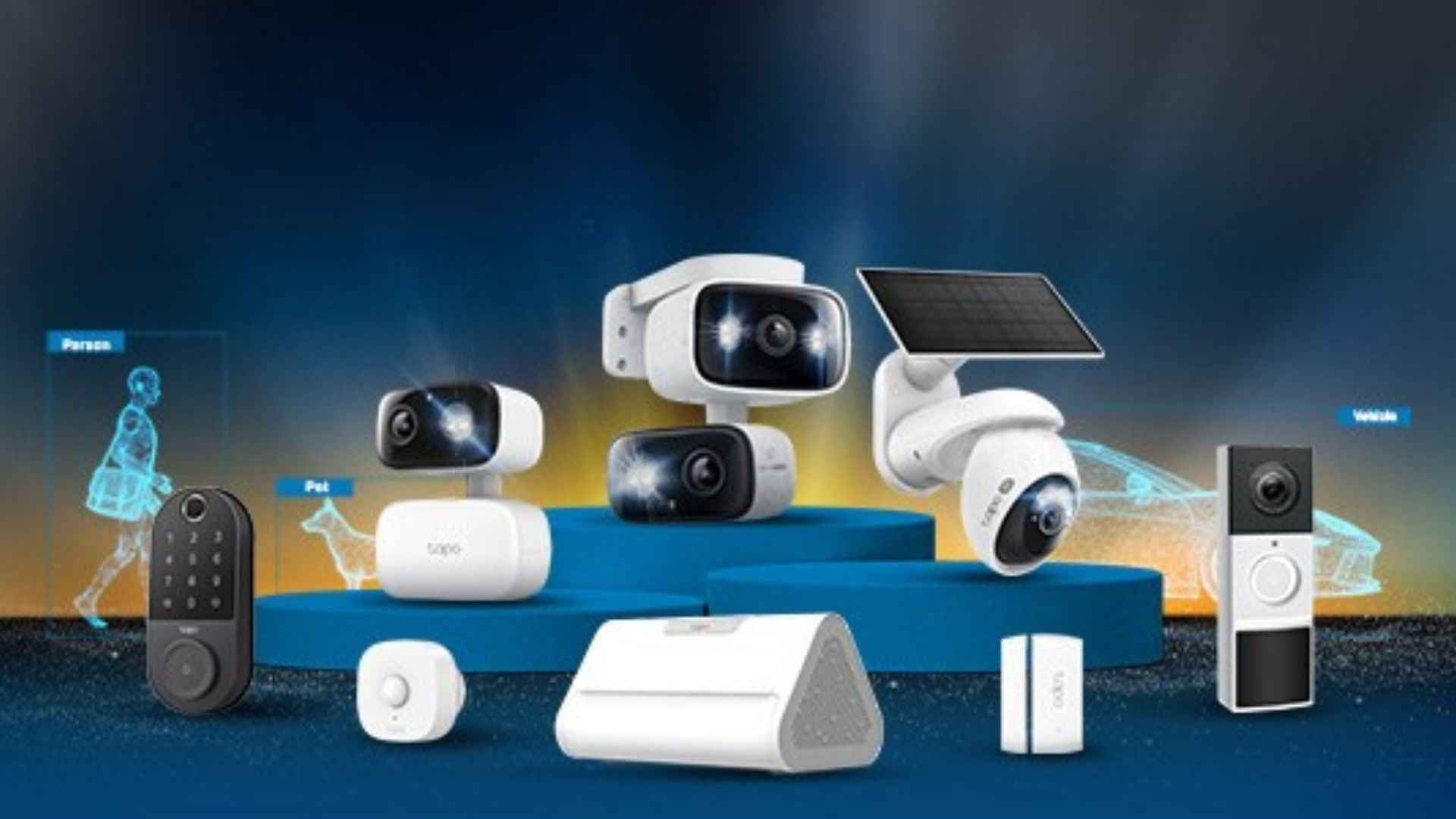
To improve accuracy, many modern cameras now incorporate AI based detection. Instead of responding to any movement, AI systems analyse shapes and patterns to identify specific subjects such as people, vehicles or pets. This significantly reduces false alerts and makes notifications more meaningful. Users can often define activity zones, ensuring alerts are only triggered within selected areas of the frame.

More advanced AI systems are beginning to go beyond simple object recognition. For example, AI assistants such as Aireal™ are designed to interpret events more intelligently, helping users search footage using natural language and focus on important moments rather than reviewing hours of recordings. This represents a shift from basic motion sensing toward contextual understanding of what is happening in a scene. Detection accuracy improves alerts, but usability depends heavily on the app experience.
Criteria 5: Night Vision Performance
Night vision performance varies depending on the technology used. Most traditional cameras rely on infrared (IR) LEDs to capture black and white images in complete darkness. This method works reliably, but colour information is lost.

|
IR Night Vision |
Traditional Colour Night Vision |
ColorPro™ Night Vision |
Some cameras offer colour night vision using spotlights or basic low light enhancement. While colour can be retained, image quality may appear dim or grainy in very dark environments.
Advanced technologies such as Starlight night vision and ColorPro™ night vision improve low-light performance through larger aperture lenses, highly sensitive sensors and advanced image processing, allowing cameras to capture clearer images and even full-colour footage in very low light conditions.

When comparing night performance, it is also helpful to consider effective viewing distance, especially for outdoor installations.
Criteria 6: App Experience and Smart Ecosystem
Today, a home camera is not just hardware. The mobile app experience plays a central role in daily use. A well-designed app allows you to access live view, review recordings, adjust settings and manage notifications from anywhere.

Most modern systems offer core functions without requiring a subscription. These typically include live view, instant notifications, two-way audio, activity zones and local storage access. For many users, these features are sufficient for everyday monitoring.
Cloud subscription plans often provide additional benefits such as extended video history, cloud clip storage and richer notifications with snapshots. Some platforms also offer advanced AI functions through subscription tiers. Understanding which features are included for free and which require a plan helps avoid unexpected costs.
Smart ecosystem compatibility is another consideration. Many home cameras integrate with voice assistants and smart displays, allowing users to check live view through voice commands or link the camera with other smart home devices.
Multi-user sharing is also increasingly common. This allows family members to access the same camera feed with controlled permissions, making it easier to manage home monitoring collectively.
When evaluating a camera, the overall app experience and ecosystem integration can be just as important as hardware specifications. Beyond software features, hardware reliability still plays a key role in long term performance.
Criteria 7: Power and Connectivity
Power supply affects both installation flexibility and daily use.
Wired cameras connect to a constant power source, allowing stable performance and often supporting 24-hour continuous recording. However, they usually need to be installed near a power outlet.
Battery powered cameras offer more flexible placement and are easier to install in areas without wiring. To conserve energy, most battery models record only when motion is detected. Battery life depends on usage and environment.
Solar powered systems build on battery models by providing ongoing charging through a compatible solar panel, reducing the need for manual recharging in outdoor spaces.
Connectivity is equally important. Most cameras connect via Wi-Fi, while some models also offer Ethernet for more stable network performance where wireless coverage is limited.
Choosing the right combination of power and connectivity helps ensure reliable operation in your specific setup.
Criteria 8: Weather and Durability
Outdoor cameras operate in changing environments and must withstand rain, dust and temperature fluctuations.
Weather resistance is defined by an IP rating. The first digit indicates protection against dust. The second digit indicates protection against water.
For most home security installations, IP65 or IP66 is suitable:
|
Rating |
Dust Protection |
Water Protection |
Best For |
|
IP65 |
Dust protected |
Resistant to rain and water spray |
Covered outdoor areas |
|
IP66 |
Dust tight |
Protected against strong water jets |
Fully exposed outdoor areas |
Indoor cameras usually do not require high IP ratings. Outdoor models should be chosen based on exposure level, especially in areas with heavy rain or coastal conditions.
In addition to IP rating, overall build quality such as sealed housing and protected ports contributes to long term durability.
Criteria 9: Privacy and Data Security
As home cameras are connected devices, data security is an important consideration.
Most modern systems use encrypted transmission protocols such as SSL or TLS to help protect video streams and account information. User controls, including password protection, recording schedule settings and permission management for shared users, also contribute to overall security.
For users who prefer greater control over storage, checking local storage options and supported standards can provide additional flexibility.
Home Camera Recommendations | 2026
Now that you have a clearer idea of what to look for, here are two up-to-date recommendations for 2026, one for indoor use and one for outdoor use.
Indoor Home Camera Recommendation: Tapo C260
If you want a high clarity indoor camera with strong everyday usability, Tapo C260 is a solid choice. It records in 4K 8MP and supports a wide pan and tilt range, with 360 degrees horizontal and 116 degrees vertical coverage, which helps reduce blind spots in most rooms.

For smarter alerts, it supports AI detection such as person, pet and vehicle detection, plus face recognition for more refined notifications. It also includes physical privacy mode and customisable block zones for more control at home.
In terms of storage and connectivity, it supports microSD storage up to 512GB, connects via 2.4GHz or 5GHz Wi-Fi, and supports voice control with Google Assistant and Amazon Alexa.
Outdoor Home Camera Recommendation: Tapo C660 KIT
For outdoor monitoring where flexible installation matters, Tapo C660 KIT is designed as a solar powered pan and tilt camera kit. It records in 4K 8MP and supports 18× digital zoom, with 360° coverage enabled by pan/tilt and AI tracking.

It offers person, pet and vehicle detection without requiring a subscription, and uses Starlight Colour Night Vision supported by an F1.6 lens, starlight sensor and built-in spotlights for clearer low-light footage.

For day-to-day practicality, it includes a 10,000mAh built-in rechargeable battery and comes with the Tapo A201 solar panel for continuous outdoor operation. It supports dual-band Wi-Fi, microSD storage up to 512GB, and IP65 weather resistance for both the camera and solar panel. When connected to constant power, the C660 KIT also supports 24/7 continuous recording to a microSD card.
Every home setup is different. The right camera depends on how and where you plan to use it.
To explore current models and filter by your installation needs, visit the Tapo Security Cameras page and use the built-in finder tool to match the right solution to your space.

Leave a comment
This site is protected by hCaptcha and the hCaptcha Privacy Policy and Terms of Service apply.